
Periodic Table Trends Worksheet
Periodic Table Trends Worksheet - Able to calculate the number of electrons, protons and neutrons given the atomic number or mass for. Understand the reasons for metallic, nonmetallic, and metalloid character;. Able to know the difference between and predict periodic trends of atomic numbers and mass. Discuss the importance of mendeleev’s periodic law. Atomic radius for each of the following sets of atoms, rank the atoms from smallest to largest atomic radius. Identify each element as a metal, metalloid, or nonmetal: What trend in atomic radius do you see as you go down a group/family on the periodic table? Know periodic trends of atomic size, ionic size, ionization energy, and electron affinity; Periodic trends atomic radius 1.

Periodic Trends Practice Worksheet
Discuss the importance of mendeleev’s periodic law. Able to calculate the number of electrons, protons and neutrons given the atomic number or mass for. Know periodic trends of atomic size, ionic size, ionization energy, and electron affinity; Able to know the difference between and predict periodic trends of atomic numbers and mass. Periodic trends atomic radius 1.

AP CHEMISTRY Periodic Trends Worksheet
Periodic trends atomic radius 1. Atomic radius for each of the following sets of atoms, rank the atoms from smallest to largest atomic radius. Able to calculate the number of electrons, protons and neutrons given the atomic number or mass for. Understand the reasons for metallic, nonmetallic, and metalloid character;. Identify each element as a metal, metalloid, or nonmetal:

Periodic Trends Practice Worksheet Printable Calendars AT A GLANCE
Know periodic trends of atomic size, ionic size, ionization energy, and electron affinity; What trend in atomic radius do you see as you go down a group/family on the periodic table? Discuss the importance of mendeleev’s periodic law. Identify each element as a metal, metalloid, or nonmetal: Able to know the difference between and predict periodic trends of atomic numbers.

Free Printable Periodic Trends Worksheets
Understand the reasons for metallic, nonmetallic, and metalloid character;. Discuss the importance of mendeleev’s periodic law. Identify each element as a metal, metalloid, or nonmetal: Able to calculate the number of electrons, protons and neutrons given the atomic number or mass for. Periodic trends atomic radius 1.

Periodic Trends Worksheet Answers
Understand the reasons for metallic, nonmetallic, and metalloid character;. Identify each element as a metal, metalloid, or nonmetal: Able to calculate the number of electrons, protons and neutrons given the atomic number or mass for. Discuss the importance of mendeleev’s periodic law. Atomic radius for each of the following sets of atoms, rank the atoms from smallest to largest atomic.

Worksheet Periodic Table Trends Englishworksheet.my.id
What trend in atomic radius do you see as you go down a group/family on the periodic table? Periodic trends atomic radius 1. Able to calculate the number of electrons, protons and neutrons given the atomic number or mass for. Understand the reasons for metallic, nonmetallic, and metalloid character;. Know periodic trends of atomic size, ionic size, ionization energy, and.

Worksheet Periodic Table Trends
Able to calculate the number of electrons, protons and neutrons given the atomic number or mass for. Able to know the difference between and predict periodic trends of atomic numbers and mass. What trend in atomic radius do you see as you go down a group/family on the periodic table? Know periodic trends of atomic size, ionic size, ionization energy,.

Worksheet Periodic Table Trends
Able to know the difference between and predict periodic trends of atomic numbers and mass. Able to calculate the number of electrons, protons and neutrons given the atomic number or mass for. What trend in atomic radius do you see as you go down a group/family on the periodic table? Know periodic trends of atomic size, ionic size, ionization energy,.

Worksheet Periodic Table Trends Englishworksheet.my.id
Know periodic trends of atomic size, ionic size, ionization energy, and electron affinity; Able to calculate the number of electrons, protons and neutrons given the atomic number or mass for. Periodic trends atomic radius 1. Discuss the importance of mendeleev’s periodic law. What trend in atomic radius do you see as you go down a group/family on the periodic table?
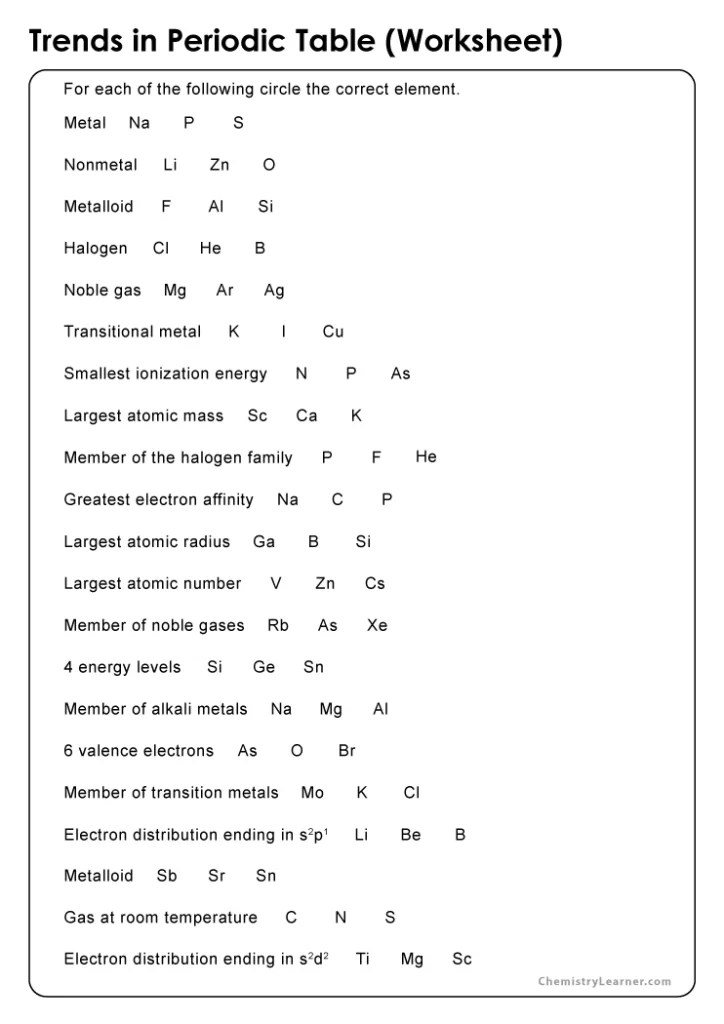
Free Printable Periodic Trends Worksheets
Identify each element as a metal, metalloid, or nonmetal: Discuss the importance of mendeleev’s periodic law. Know periodic trends of atomic size, ionic size, ionization energy, and electron affinity; Understand the reasons for metallic, nonmetallic, and metalloid character;. Able to know the difference between and predict periodic trends of atomic numbers and mass.
What trend in atomic radius do you see as you go down a group/family on the periodic table? Atomic radius for each of the following sets of atoms, rank the atoms from smallest to largest atomic radius. Understand the reasons for metallic, nonmetallic, and metalloid character;. Know periodic trends of atomic size, ionic size, ionization energy, and electron affinity; Periodic trends atomic radius 1. Able to know the difference between and predict periodic trends of atomic numbers and mass. Discuss the importance of mendeleev’s periodic law. Identify each element as a metal, metalloid, or nonmetal: Able to calculate the number of electrons, protons and neutrons given the atomic number or mass for.
Know Periodic Trends Of Atomic Size, Ionic Size, Ionization Energy, And Electron Affinity;
Understand the reasons for metallic, nonmetallic, and metalloid character;. Discuss the importance of mendeleev’s periodic law. Able to know the difference between and predict periodic trends of atomic numbers and mass. Identify each element as a metal, metalloid, or nonmetal:
Atomic Radius For Each Of The Following Sets Of Atoms, Rank The Atoms From Smallest To Largest Atomic Radius.
What trend in atomic radius do you see as you go down a group/family on the periodic table? Periodic trends atomic radius 1. Able to calculate the number of electrons, protons and neutrons given the atomic number or mass for.