
Limiting Reactant And Percent Yield Worksheet Answers
Limiting Reactant And Percent Yield Worksheet Answers - A) what is the limiting reactant? Solve stoichiometric problems from a balanced chemical equation. Differentiate between the actual yield and theoretical yield of a chemical. Write the balanced equation for the. B) how many grams of carbon dioxide is produced? B) how many grams of zns will be formed? When copper (ii) chloride reacts with sodium nitrate, copper (ii) nitrate and sodium chloride are formed. A.) which reactant is limiting if 0.32. What is the limiting reagent in the reaction described in problem 2? C) how many grams of the excess reactant will remain after.

Limiting Reactant And Percent Yield Worksheets
Limiting reactant and percent yield worksheets aside from their knowledge of limiting reagents, students are expected to know about percent yield and solve problems. Differentiate between the actual yield and theoretical yield of a chemical. A.) which reactant is limiting if 0.32. A) what is the limiting reactant? B) how many grams of zns will be formed?

141 Limiting Reactant Worksheet Key Limiting Reactant Theoretical and Percentage Yields Key 4
A.) which reactant is limiting if 0.32. C) how many grams of excess reactant are left? Limiting reactant and percent yield worksheets aside from their knowledge of limiting reagents, students are expected to know about percent yield and solve problems. B) how many grams of zns will be formed? B) how many grams of carbon dioxide is produced?

Limiting Reagent And Percent Yield Worksheet
A) which chemical is the limiting reactant? Use the folowing equation for the oxidation of aluminum in the following problems. When copper (ii) chloride reacts with sodium nitrate, copper (ii) nitrate and sodium chloride are formed. A) what is the limiting reactant? Write the balanced equation for the.

Limiting Reagent And Percent Yield Practice
Because sodium iodide is the reagent that causes 8.51 grams of sodium. B) how many grams of carbon dioxide is produced? A.) which reactant is limiting if 0.32. C) how many grams of excess reactant are left? Differentiate between the actual yield and theoretical yield of a chemical.

Limiting Reactant And Percent Yield Worksheet
C) how many grams of the excess reactant will remain after. C) how many grams of excess reactant are left? Use the folowing equation for the oxidation of aluminum in the following problems. Solve stoichiometric problems from a balanced chemical equation. Limiting reactant and percent yield worksheets aside from their knowledge of limiting reagents, students are expected to know about.

Limiting Reagents And Percentage Yield Worksheets Answers
A) what is the limiting reactant? Write the balanced equation for the. Limiting reactant and percent yield worksheets aside from their knowledge of limiting reagents, students are expected to know about percent yield and solve problems. C) how many grams of excess reactant are left? A.) which reactant is limiting if 0.32.

Limiting Reagent And Percent Yield Worksheet
What is the limiting reagent in the reaction described in problem 2? A) what is the limiting reactant? A) which chemical is the limiting reactant? A.) which reactant is limiting if 0.32. Because sodium iodide is the reagent that causes 8.51 grams of sodium.
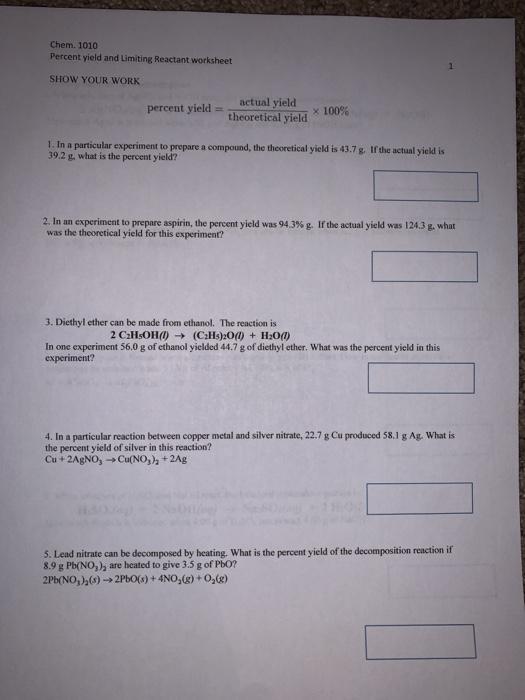
Solved Chem. 1010 Percent yield and Limiting Reactant
What is the limiting reagent in the reaction described in problem 2? A) which chemical is the limiting reactant? Solve stoichiometric problems from a balanced chemical equation. B) how many grams of zns will be formed? C) how many grams of the excess reactant will remain after.

Limiting Reactant And Percent Yield Worksheet
B) how many grams of carbon dioxide is produced? Because sodium iodide is the reagent that causes 8.51 grams of sodium. Limiting reactant and percent yield worksheets aside from their knowledge of limiting reagents, students are expected to know about percent yield and solve problems. C) how many grams of excess reactant are left? Write the balanced equation for the.

Limiting Reagents and Percentage Yield Worksheet
C) how many grams of excess reactant are left? Differentiate between the actual yield and theoretical yield of a chemical. Use the folowing equation for the oxidation of aluminum in the following problems. Because sodium iodide is the reagent that causes 8.51 grams of sodium. Limiting reactant and percent yield worksheets aside from their knowledge of limiting reagents, students are.
Solve stoichiometric problems from a balanced chemical equation. A.) which reactant is limiting if 0.32. A) what is the limiting reactant? Write the balanced equation for the. A) which chemical is the limiting reactant? Differentiate between the actual yield and theoretical yield of a chemical. C) how many grams of the excess reactant will remain after. What is the limiting reagent in the reaction described in problem 2? When copper (ii) chloride reacts with sodium nitrate, copper (ii) nitrate and sodium chloride are formed. B) how many grams of zns will be formed? Limiting reactant and percent yield worksheets aside from their knowledge of limiting reagents, students are expected to know about percent yield and solve problems. Use the folowing equation for the oxidation of aluminum in the following problems. C) how many grams of excess reactant are left? B) how many grams of carbon dioxide is produced? Because sodium iodide is the reagent that causes 8.51 grams of sodium.
What Is The Limiting Reagent In The Reaction Described In Problem 2?
Because sodium iodide is the reagent that causes 8.51 grams of sodium. Use the folowing equation for the oxidation of aluminum in the following problems. A.) which reactant is limiting if 0.32. Limiting reactant and percent yield worksheets aside from their knowledge of limiting reagents, students are expected to know about percent yield and solve problems.
C) How Many Grams Of The Excess Reactant Will Remain After.
When copper (ii) chloride reacts with sodium nitrate, copper (ii) nitrate and sodium chloride are formed. B) how many grams of zns will be formed? A) what is the limiting reactant? Write the balanced equation for the.
Solve Stoichiometric Problems From A Balanced Chemical Equation.
Differentiate between the actual yield and theoretical yield of a chemical. C) how many grams of excess reactant are left? B) how many grams of carbon dioxide is produced? A) which chemical is the limiting reactant?